

Podcast: Play in new window | Download (Duration: 47:41 — 65.5MB) | Embed
Subscribe: RSS
|
This episode is also available in video format -> For additional Video Episodes, go to the |
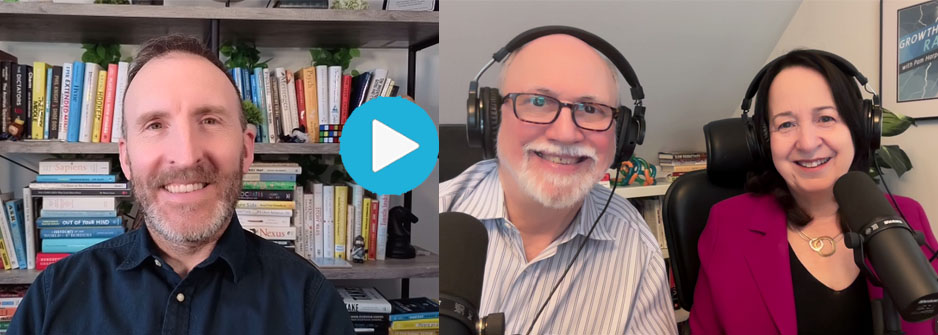 |
We speak with Owen Fitzpatrick, social psychologist, global keynote & TEDx speaker, and author of ten books, about how what he calls our “inner propaganda” shapes leadership, conflict, and change.
As you’re leading for business innovation and transformational growth, it’s likely you’ve experienced how differently people can respond to the same set of facts. We’ve found that even when top leadership agrees that the company needs to evolve, it takes more than a sound business case for people to truly commit to moving in a new direction. This can be especially true in turbulent times. Emotion, identity, and the stories we tell ourselves about what is true can be just as influential.
That’s why we invited Owen Fitzpatrick to join us for this conversation. He’s a social psychologist, keynote speaker, and author who has spent 25 years studying how beliefs form and change. He works with leaders and organizations who are trying to make change happen in their teams, their culture, their communication, and themselves. His clients include major organizations such as Google, Pfizer, JP Morgan, and Salesforce. He’s spoken to audiences in 31 countries, and his TEDx Talk and online videos have over two million views. Owen is the author of nine books on behavioral science. His 10th book is “Inner Propaganda: Leading Hearts and Minds Through Turbulent Times.” It will be released on August 4th, 2026.
Owen explains how our feelings, identities, assumptions and internal stories shape what we believe to be true. He shares how the internal narratives he describes in “Inner Propaganda” influence the way leaders respond to feedback, how others interpret changes, and what shapes their decision to commit. We dig deeper into how you can increase your awareness of the beliefs shaping your own responses and better understand the beliefs shaping others’ responses. We then talk about what it takes to create the conditions for more productive conversations that can bridge differences. Finally, we discuss three immediately useful ideas for recognizing our inner propaganda.
This week on Growth Igniters® Radio, we discuss:
- Owen’s take on how our feelings, identities, assumptions, and internal stories shape what we believe to be true
- Why logic alone may not generate commitment to change, even when the business case makes sense
- How a leader transformed resistance to a major technology initiative by addressing whether the change felt right, fit with people’s identities, and made sense
- Three immediately useful ideas for recognizing our inner propaganda
The most dangerous propaganda doesn’t come from the screen. It comes from the mirror. | Owen Fitzpatrick
Resources for This Episode
- Read more about Owen Fitzpatrick and connect with him on LinkedIn
- Find out more about Owen’s book, “Hidden Propaganda“
- Visit PamHarperSpeaks.com to find out more about her keynote “Break Orbit: Leading for Long-Term Growth in a Short-Term World”